 EN
EN



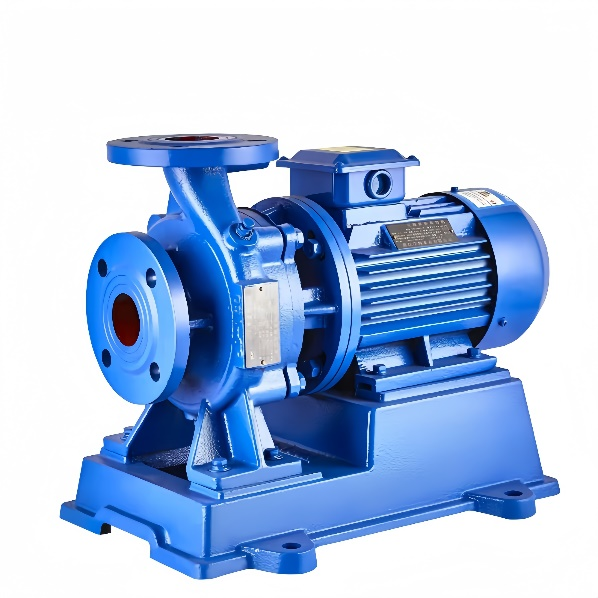
Core Operating Principles of Horizontal Centrifugal Pumps
Horizontal centrifugal pumps leverage rotational energy to optimize fluid transport in industrial systems. Their efficiency stems from foundational engineering principles refined through decades of hydraulic research.
How Centrifugal Force Enables Efficient Fluid Movement in Industrial Systems
When the impeller spins fast, it creates centrifugal force that pushes fluid outwards in all directions. As this happens, the moving fluid gains speed which then turns into pressure once it leaves through the volute casing around the pump. This basic concept has been confirmed time and again by engineers working on industrial pumping systems. For those who design them right, horizontal centrifugal pumps can reach efficiencies of about 92% when dealing with fluids similar to water in thickness. That makes sense from a physics standpoint too since there's less resistance to overcome compared to thicker substances.
Impeller Dynamics and Pressure Differential: The Science Behind Smooth Flow Delivery
Impeller blade geometry directly impacts performance:
| Design Feature | Performance Impact |
|---|---|
| Backward-curved blades | Higher efficiency at peak loads |
| Radial blades | Superior pressure generation |
| Forward-curved blades | Increased flow rates |
Balancing tip speed (typically 25–40 m/s) and clearance tolerances (±0.1mm) prevents recirculation losses while maintaining stable pressure differentials.
Optimizing Pump Selection With System Head and Flow Requirements
The Hydraulic Institute's HI 14.6 standard recommends matching pump curves to system resistance profiles within 10% of best efficiency point (BEP). Oversizing pumps by just 20% can increase energy costs by $8,400 annually in mid-sized industrial plants.
Role of Computational Fluid Dynamics (CFD) in Modern Pump Design
CFD simulations now reduce prototype testing costs by 40–60% (ASME 2023). By modeling turbulence patterns and pressure gradients, engineers optimize volute tongue geometry, impeller eye diameters, and bearing load distributions. These advancements have increased average pump lifespan from 7 to 12 years in aggressive fluid-handling applications.
Energy Efficiency and Operational Cost Savings
Horizontal centrifugal pumps achieve superior energy efficiency through innovative hydrodynamic design, reducing industrial power consumption by 15–30% compared to outdated models (Fluid Handling Institute 2023). Their optimized operation directly translates to measurable cost reductions in continuous-process industries like water treatment and chemical manufacturing.
Reducing Energy Consumption in Large-Scale Industrial Applications
The radial impeller design minimizes fluid turbulence, requiring 25% less torque to move high-volume flows compared to axial-flow pumps. This efficiency gain is critical in 24/7 operations where pumps account for 40–60% of total facility energy use, based on DOE motor system studies.
High Hydraulic Efficiency Through Optimized Volute Casing Design
Advanced computational modeling enables tapered volutes that maintain stable pressure gradients across all flow rates, eliminating energy-wasting vortex shedding. Third-party tests show 92% hydraulic efficiency in API-610 compliant designs—a 7-point improvement over legacy casings.
Case Study: Energy Savings in a Water Treatment Facility After Upgrading to High-Efficiency Horizontal Centrifugal Pumps
A Midwestern water plant replaced 12 vertical turbine pumps with horizontal centrifugal units featuring double-suction impellers and IE4 motors. The upgrade yielded 32% energy savings within the first year, reducing annual electricity costs by $186,000 while maintaining 1,800 GPM flow requirements.
Integrating IE4 Premium Efficiency Motors for Maximum Power Utilization
IE4-class motors reduce electromagnetic losses by 15–20% compared to IE3 models through improved lamination stacking and copper winding techniques. When paired with horizontal centrifugal pumps in variable-speed applications, they achieve NEMA Premium® efficiency levels even during partial-load conditions.
Strategy: Conducting Pump System Audits to Identify Inefficiencies and Retrofit Opportunities
A three-phase audit approach—flow measurement, motor load analysis, and pressure mapping—typically uncovers 18–35% energy savings potential in unoptimized systems. Top corrective actions include impeller trimming (12–18% savings), VFD retrofits (22–40% savings), and seal chamber redesigns to minimize parasitic losses.
Advanced Control and Variable Speed Technologies
Matching dynamic process demands with variable load capabilities
Horizontal centrifugal pumps with variable speed control automatically adjust to fluctuating industrial demands, reducing energy waste during low-load periods. By modulating pump speed to match real-time flow requirements, facilities maintain consistent pressure while cutting energy consumption by 18–22% compared to fixed-speed systems (Hydraulic Institute 2023).
Precision flow regulation using variable frequency drives (VFDs)
Horizontal centrifugal pumps equipped with modern VFD technology can maintain around 2% accuracy in flow rates thanks to those real time adjustments made to motor frequencies. According to the latest findings from the Energy Savings in Water Infrastructure Report for 2024, these variable frequency drives actually cut down on energy waste by getting rid of those pesky throttling valve losses. We're talking about recovering roughly 35% of what would otherwise be lost energy throughout pipeline systems. What makes this tech stand out is its performance in situations where flow needs change constantly. Take batch processing plants for instance, where operators need to adjust flows multiple times during production runs. These facilities really benefit from having such precise control over their pumping systems.
Case Study: 30% reduction in operational costs at a wastewater treatment plant using VFD-integrated horizontal centrifugal pumps
A Midwest wastewater facility achieved $480,000 annual savings after replacing six fixed-speed pumps with horizontal centrifugal units equipped with adaptive VFDs. The upgrade reduced:
- Energy consumption by 34% (2.1 GWh/year savings)
- Maintenance costs by 28% through reduced bearing stress
- Chemical treatment costs by 19% from stabilized flow rates
Emerging trend: Sensor-embedded pumps for real-time performance monitoring
Leading manufacturers now embed IoT sensors in horizontal centrifugal pump housings to track vibration spectra (0–10 kHz range), bearing temperature (±0.5°C accuracy), and cavitation signatures. This data enables predictive maintenance, reducing unplanned downtime by 41% in chemical processing plants (Pump Systems Matter 2023 data).
Designing intelligent control algorithms for partial-load energy optimization
Advanced PID controllers combine flow, pressure, and viscosity inputs to optimize horizontal centrifugal pump efficiency during partial-load operation. Machine learning models now achieve 97.4% accuracy in predicting optimal motor speeds, yielding 15–20% energy savings during off-peak production cycles.
Reliability, Maintenance, and Long-Term Performance
Robust bearing and seal configurations ensuring fluid handling reliability
The reliability of horizontal centrifugal pumps comes down to their advanced bearing systems and those multi-stage mechanical seals we see these days. The newer models actually cut down on friction losses somewhere around 18 to maybe even 22 percent when compared to older designs. And they keep leakage rates really low too, under half a percent during continuous running according to some research from Tompacks back in 2023. What makes them stand out for many industrial settings is how the forged steel shafts work together with silicon carbide seals to handle pressures way beyond 35 bar. This kind of durability matters a lot in chemical processing where equipment needs to perform consistently under tough conditions without breaking down.
Simplified maintenance access enabled by horizontal split-case design
With the horizontal split-case setup, workers can reach the rotor completely without having to disconnect any pipelines, which cuts down on service time by about 40% for city water systems. Municipal operations really benefit from this when they need to get maintenance done within just under five hours. A look at data from 47 different power plants over twelve months backs this up. Field technicians working across various industrial sites have noticed around a third better compliance rates with regular maintenance tasks compared to those dealing with vertical turbine pumps. Some plant managers even say it makes scheduling much less stressful during peak operation periods.
Comparative analysis: Downtime and serviceability of horizontal vs. vertical pump configurations
According to industry stats, horizontal centrifugal pumps tend to sit idle about 23% less often than their vertical counterparts during refinery work. When it comes to getting bearings replaced, maintenance crews can finish the job in around 4 hours and 40 minutes compared to nearly 8 hours for similar vertical pumps. That kind of time difference really matters when production stops are so costly. Plus, the horizontal setup benefits from having standard parts readily available across different facilities, which cuts down on average repair times by roughly a third when looking at various industries side by side.
Scalability and Integration Across Key Industrial Applications
Horizontal centrifugal pumps demonstrate exceptional adaptability across diverse industrial sectors, with design features that enable seamless integration into both new installations and existing infrastructure. Their modular architecture and standardized connection points simplify retrofitting processes while maintaining operational continuity.
Application in oil and gas refining: Reliable transfer under high-pressure conditions
These pumps efficiently handle crude oil transfers and pipeline boosting at pressures exceeding 85 bar. Advanced seal technologies prevent hydrocarbon leakage, while hardened stainless steel impellers withstand abrasive particulates common in extraction processes.
Cooling and condensate systems in power generation plants
Thermal power stations utilize horizontal centrifugal pumps to circulate 12,000–18,000 GPM of cooling water through condenser systems. Their non-pulsating flow characteristics ensure stable heat rejection rates, with materials engineered to resist thermal fatigue from 40°C–200°C temperature cycles.
Sanitary fluid handling in food and beverage production lines
Food-grade variants feature electropolished surfaces and crevice-free designs that meet 3-A sanitary standards. CIP (Clean-in-Place) compatible models reduce microbial contamination risks during dairy or juice processing, maintaining flow rates up to 95% efficiency after 10,000 operational hours.
Modular staging and retrofitting into existing pipelines for flexible scalability
Recent studies in industrial fluid dynamics research demonstrate that staged pump configurations can increase system capacity by 40% without complete overhauls (MDPI, 2023). This approach proves particularly valuable when integrating with legacy infrastructure, emphasizing backward compatibility through standardized flange connections and Smart PLC interfaces.
FAQs
What is the efficiency range for horizontal centrifugal pumps?
Horizontal centrifugal pumps can reach efficiencies of about 92% when handling fluids with viscosities similar to water.
How does impeller design affect pump performance?
Impeller blade geometry impacts performance by influencing efficiency, pressure generation, and flow rates. Different designs, such as backward-curved or radial blades, optimize these characteristics.
What role do IE4 motors play in pump efficiency?
IE4 motors enhance pump efficiency by reducing electromagnetic losses through better lamination and copper winding techniques, achieving higher efficiency levels even at partial loads.
How do horizontal centrifugal pumps contribute to energy savings?
They reduce industrial power consumption by 15–30% and energy waste by modulating speeds to meet flow requirements, thanks to variable frequency drives and advanced control technologies.
Why are horizontal centrifugal pumps preferred in maintenance scenarios?
Their design allows easy access to components without disconnecting pipelines, reducing maintenance time and facilitating compliance with maintenance schedules.
How do horizontal centrifugal pumps integrate into various industrial applications?
These pumps are versatile, with features that enable seamless integration into multiple applications, including oil and gas, power generation, and food processing, thanks to their adaptability and modular architecture.
Table of Contents
- Core Operating Principles of Horizontal Centrifugal Pumps
-
Energy Efficiency and Operational Cost Savings
- Reducing Energy Consumption in Large-Scale Industrial Applications
- High Hydraulic Efficiency Through Optimized Volute Casing Design
- Case Study: Energy Savings in a Water Treatment Facility After Upgrading to High-Efficiency Horizontal Centrifugal Pumps
- Integrating IE4 Premium Efficiency Motors for Maximum Power Utilization
- Strategy: Conducting Pump System Audits to Identify Inefficiencies and Retrofit Opportunities
-
Advanced Control and Variable Speed Technologies
- Matching dynamic process demands with variable load capabilities
- Precision flow regulation using variable frequency drives (VFDs)
- Case Study: 30% reduction in operational costs at a wastewater treatment plant using VFD-integrated horizontal centrifugal pumps
- Emerging trend: Sensor-embedded pumps for real-time performance monitoring
- Designing intelligent control algorithms for partial-load energy optimization
- Reliability, Maintenance, and Long-Term Performance
- Scalability and Integration Across Key Industrial Applications
-
FAQs
- What is the efficiency range for horizontal centrifugal pumps?
- How does impeller design affect pump performance?
- What role do IE4 motors play in pump efficiency?
- How do horizontal centrifugal pumps contribute to energy savings?
- Why are horizontal centrifugal pumps preferred in maintenance scenarios?
- How do horizontal centrifugal pumps integrate into various industrial applications?