 EN
EN



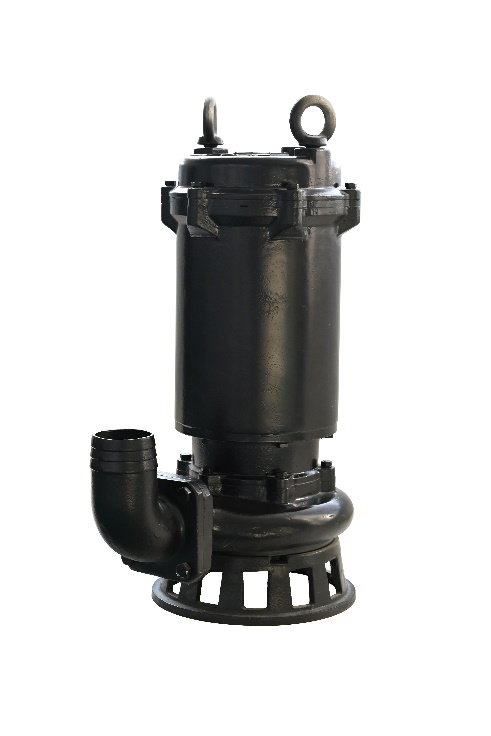
Understanding Flow Rate and Its Role in Agricultural Water Pump Efficiency
Defining flow rate and its impact on large-area farm irrigation performance
The amount of water pumped out by agricultural equipment is measured using units like gallons per minute (GPM) or liters per second. When running big farms, getting the right flow rate matters a lot. If there's not enough water flowing through, crops end up getting wet in some spots and dry in others. But when too much water comes through, it just burns through extra electricity and puts unnecessary stress on pipes and pumps. According to research published last year, farmers who matched their pump settings to what their plants actually needed saw around 34 percent less wasted water than those whose systems were off track. There are formulas available to figure all this out accurately. One common method involves calculating GPM based on total water requirement divided by irrigation time over 60 minutes. This helps determine exactly how much water should be moving through fields each day depending on both plant needs and land size.
How flow rate and pressure work together in agricultural water pump systems
The relationship between flow rate and pressure is pretty important when setting up irrigation systems. High pressure sprinklers need pumps that can handle good flow rates around 8 to 12 gallons per minute per acre while keeping pressure steady somewhere between 50 and 80 psi. Take a 500 acre corn field for instance it would need about 4,000 gpm at roughly 65 psi throughout the entire system. Getting this balance right matters a lot because if things go off track, pipes might burst under too much pressure or crops won't get enough water coverage. We saw this happen in real life according to some research done by the Ponemon Institute on agricultural water management issues.
Matching flow rate and pressure to system demands for optimal efficiency
Today's irrigation setups incorporate pressure compensating emitters along with variable frequency drives (VFDs) so that pump output matches what's actually needed right now. Take vineyards as a case in point they might start off with around 6 gallons per minute per acre when the plants are dormant, then ramp up to about 15 GPM per acre during their active growing season. This kind of adjustment saves roughly 22 percent on yearly energy costs according to industry data. When pumps aren't properly matched to demand, there's usually an 18% drop in efficiency for those old style fixed speed pumps running at less than full capacity all the time.
Assessing Irrigation Requirements for Large-Area Farms
Estimating Water Demand Based on Crop Type, Soil, and Climate Conditions
Water requirements vary depending on what's growing in the field. For example, corn typically needs around 0.3 to 0.35 inches of water each day when it's in full swing, whereas soybeans generally get by with about 0.25 inches according to Michigan State University Extension research from last year. Soil type makes a big difference too. Sandy soils soak up water fast but lose moisture just as quickly, so farmers often find themselves turning on the sprinklers about 20% more often compared to fields with clay soil. Things get even trickier in areas with lots of humidity where the rate at which plants release water through leaves changes constantly. Smart growers adjust their watering schedules accordingly, making sure not to drown crops while still factoring in all that rain falling from the sky.
Calculating Total Acreage and Distribution Layout Effects
Field shape influences system efficiency—a 500-acre rectangular layout needs 15% less piping and lower flow than irregular equivalents. Central pivot systems reduce pressure losses by 30% compared to furrow irrigation.
Accounting for Daily and Seasonal Variations in Irrigation Cycles
Summer demand can triple spring usage, requiring pumps capable of 3,000–5,000 GPM for 1,000-acre farms. Moisture sensors reduce seasonal water use by 18% by triggering irrigation only when needed, rather than on fixed schedules. In temperate zones, winterized systems benefit from a 25% flow headroom to support frost protection.
Sizing the Agricultural Water Pump: Flow Rate, Head, and System Balance
Step-by-Step Method to Calculate Required Flow Rate for Large-Scale Irrigation
To determine flow rate (GPM), apply the formula:
Q = (A × ET × K) / (H × E)
- A = Total irrigated acres
- ET = Crop evapotranspiration rate (inches/day)
- K = Crop coefficient
- H = Daily operating hours
- E = System efficiency (typically 70–85%)
For a 250-acre corn farm with 0.35" daily ET, peak demand is approximately 1,200 GPM. Farms using this method saw 18–22% less water waste than those relying on estimates. Precision pump selection guides recommend adding a 15% safety margin for aging pipes or crop rotation changes.
Total Dynamic Head and Its Critical Role in Pump Selection
Total dynamic head (TDH) combines four elements:
- Static lift: Vertical distance from source to discharge
- Friction losses: Pipe resistance (typically 2–5 PSI per 100 ft)
- Operating pressure: Needed at emitters (30–50 PSI)
- Safety margin: 10–20% for future degradation
Underestimating TDH by just 10% can reduce pump efficiency by up to 34% (USDA, 2022). Centrifugal pumps lose 7% efficiency for every 3 PSI beyond their rated capacity.
Balancing Flow Rate and Head to Maximize Agricultural Water Pump Performance
Optimal performance occurs where the pump curve meets the system curve:
| Parameter | Optimal Range | Consequences of Deviation |
|---|---|---|
| Flow Rate | 85–110% of design | <85%: Stagnation >110%: Cavitation |
| Pressure | 90–105% of TDH | <90%: Incomplete coverage |
| Power Consumption | 70–100% of rated load | >100%: Premature motor failure |
Variable frequency drives (VFDs) enable 22–28% energy savings by adjusting output to real-time conditions (DOE, 2023).
Case Study: Consequences of Flow Rate Miscalculation on a 500-Acre Farm
A Midwest soybean operation underestimated friction losses by 18 PSI due to undersized mainlines, resulting in:
- 31% drop in effective flow
- $8,200 in extra energy costs per season
- 15% yield loss in outer fields
After recalculating TDH and upgrading piping, the farm improved water distribution uniformity by 19% and reduced daily pump runtime by 2.2 hours.
Selecting the Right Pump Type for Large-Area Agricultural Irrigation
Comparing Centrifugal, Submersible, and Turbine Pumps for High-Flow Applications
Centrifugal pumps suit surface water sources, delivering 200–2,000 GPM for sprinkler systems on flat terrain. Submersible pumps are ideal for deep wells (>100 ft), maintaining 85% efficiency even at 1,500 GPM. Turbine pumps handle reservoir-fed systems with lifts up to 200 ft, offering 500–5,000 GPM capacity across varied elevations.
Matching Agricultural Water Pump Types to Field Layout and Infrastructure
Water source location determines 72% of pump choices according to irrigation analyses. Centralized sources favor centrifugal pumps for ease of maintenance, while distributed wells require submersibles. Drip systems need tight pressure control (15–30 PSI), best achieved through turbine pumps with variable-speed drives.
| Farm Size (Acres) | Recommended Pump Type | Flow Rate Range (GPM) | Typical Application |
|---|---|---|---|
| 100–500 | Centrifugal | 500–1,500 | Flood irrigation |
| 500–1,000 | Turbine | 1,200–3,000 | Center pivot systems |
| 1,000+ | Hybrid turbine | 2,500–5,000 | Multi-zone scheduling |
Pump Selection Guidelines Across Farm Sizes: 100 to 1,000+ Acres
Farms under 500 acres achieve 92% cost efficiency with single centrifugal units. Operations exceeding 1,000 acres benefit from staged pumping—combining turbine and booster units—to cut energy use by 18% versus oversized single pumps. Modular designs now allow flow adjustments from 800–3,200 GPM without mechanical changes.
Smart Technologies and Future Trends in Agricultural Pump Sizing
IoT-Enabled Flow Monitoring for Real-Time Agricultural Water Pump Control
IoT sensors monitor flow, pressure, and soil moisture in real time, enabling dynamic irrigation adjustments that reduce water waste by up to 30%. Platforms from precision agriculture providers integrate weather forecasts and evaporation data to automatically modulate pump output, ensuring crops receive precise hydration.
AI-Driven Irrigation Scheduling and Adaptive Pump Automation
Machine learning models analyze crop type, root depth, and microclimate data to create adaptive irrigation plans. By predicting peak water demand, these systems align pump operations with biological needs instead of fixed schedules. Studies show AI-driven automation reduces energy costs by 18–22% annually while improving yield consistency across diverse terrain.
Predictive Analytics Shaping the Future of Agricultural Water Pump Selection
When it comes to predicting things like when pumps start wearing out, figuring out what happens with water demand during different seasons, and knowing where infrastructure hits its limits, predictive analytics are becoming really useful tools for farmers. Farmers who run these simulations ahead of time get to pick pumps that work well both now and as their needs grow, something super important given how unpredictable weather has become lately. What this means in practice is avoiding those expensive situations where the pump either doesn't do enough or costs way too much because it's oversized. Looking at numbers from last year, around one third of all irrigation system failures were actually caused by just this kind of mismatch between what was installed and what was really needed on site.
FAQs
What is the importance of flow rate in agricultural water pump systems?
Flow rate is crucial because it ensures that crops receive the right amount of water. An incorrect flow rate can lead to either insufficient or excessive watering, which can waste resources and damage equipment.
How do flow rate and pressure work together in irrigation systems?
Flow rate and pressure must be balanced to maintain system efficiency. High-pressure sprinklers, for example, require pumps with good flow rates while maintaining a steady pressure to avoid damage to pipes and ensure even water distribution.
What factors affect the water requirements of different crops?
Water requirements depend on the crop type, soil properties, and climatic conditions. Different crops have varying water needs, and soil type affects how often irrigation is required.
How can farmers save energy when using water pumps?
Farmers can use variable frequency drives (VFDs) to adjust pump output according to real-time conditions, which can lead to energy savings of 22-28%.
What role does predictive analytics play in pump selection?
Predictive analytics help farmers anticipate wear and tear on pumps, shifts in water demand, and system limitations, enabling more informed decisions and preventing costly mismatches.
Table of Contents
- Understanding Flow Rate and Its Role in Agricultural Water Pump Efficiency
- Assessing Irrigation Requirements for Large-Area Farms
- Sizing the Agricultural Water Pump: Flow Rate, Head, and System Balance
- Step-by-Step Method to Calculate Required Flow Rate for Large-Scale Irrigation
- Total Dynamic Head and Its Critical Role in Pump Selection
- Balancing Flow Rate and Head to Maximize Agricultural Water Pump Performance
- Case Study: Consequences of Flow Rate Miscalculation on a 500-Acre Farm
- Selecting the Right Pump Type for Large-Area Agricultural Irrigation
- Comparing Centrifugal, Submersible, and Turbine Pumps for High-Flow Applications
- Matching Agricultural Water Pump Types to Field Layout and Infrastructure
- Pump Selection Guidelines Across Farm Sizes: 100 to 1,000+ Acres
- Smart Technologies and Future Trends in Agricultural Pump Sizing
-
FAQs
- What is the importance of flow rate in agricultural water pump systems?
- How do flow rate and pressure work together in irrigation systems?
- What factors affect the water requirements of different crops?
- How can farmers save energy when using water pumps?
- What role does predictive analytics play in pump selection?