 EN
EN



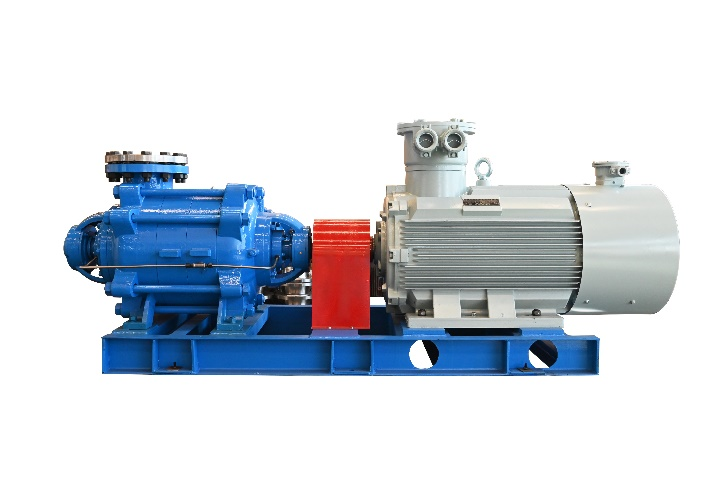
Core Working Principle: How Horizontal Centrifugal Pumps Convert Rotation into Reliable Flow
Conservation of angular momentum and Bernoulli's theorem in fluid acceleration
Centrifugal pumps work by turning rotational motion into fluid movement through some basic physics concepts. When the impeller inside starts spinning, it basically throws the fluid outwards as it gains speed, which makes sense when we think about how things move in circles. At the same time, there's something called Bernoulli's principle at play here too. The fast moving fluid around the edges creates an area of low pressure near where the liquid enters the pump, pulling more material in. These two effects working together is what allows these pumps to take mechanical spin and turn it into usable force for moving liquids through pipes and systems.
Critical components—impeller, volute casing, shaft, mechanical seal, and bearings—and their integrated energy-transfer function
Five interdependent components enable efficient, reliable energy transfer:
- The impeller accelerates fluid radially, imparting kinetic energy;
- The volute casing decelerates that flow while converting velocity into pressure—its optimized geometry reduces hydraulic losses and can boost delivery pressure by up to 20% versus basic diffusers;
- Precision bearings support the rotating shaft, maintaining impeller alignment and minimizing vibration-induced wear;
- Mechanical seals prevent leakage at the shaft penetration point, preserving system integrity and safety.
Together, these elements form a tightly coordinated system where each component's performance directly influences overall efficiency and longevity.
Efficiency Advantages: Why Horizontal Centrifugal Pumps Deliver Superior Energy and Operational Performance
Horizontal centrifugal pumps achieve industry-leading efficiency through refined hydraulic design and balanced mechanical architecture. Their head-flow curves reflect stable, high-efficiency operation across broad flow ranges—particularly valuable in mid-capacity industrial applications where load variability is common.
Head-flow efficiency curves vs. vertical multistage and positive displacement alternatives
Unlike vertical multistage or positive displacement pumps, horizontal centrifugal models sustain high efficiency across partial-load conditions. Multistage units typically drop below 60% efficiency under 70% design flow, while horizontal centrifugal pumps maintain 70–85%. Positive displacement pumps exhibit steep efficiency falloff outside narrow operating bands. The advantage compounds in high-volume systems:
| Flow Scenario | Horizontal Centrifugal | Vertical Multistage | Positive Displacement |
|---|---|---|---|
| 100% Design Flow | 88% | 82% | 85% |
| 70% Design Flow | 84% | 68% | 72% |
| 40% Design Flow | 75% | 52% | 48% |
Real-world energy savings: 15–30% lower kWh/m³ in HVAC and industrial cooling loops (per ASHRAE RP-1672)
Tests conducted under ASHRAE RP-1672 show that horizontal centrifugal pumps can cut down on energy consumption anywhere from 15 to 30 percent for every cubic meter processed in both HVAC systems and industrial cooling setups. The main reasons behind these savings include less internal recirculation happening inside the pump, lower friction as fluids move through, and better overall hydraulic compatibility between components. When it comes to chemical processing plants specifically, these pumps tend to save around 22% in power usage when running continuously against traditional diaphragm pumps. Another big plus is how balanced radial loading works to decrease mechanical strain on parts, which means equipment lasts longer before needing maintenance or replacement. Studies indicate this results in roughly 40% improvement in mean time between failures when compared with vertical pump arrangements.
Application-Driven Design Optimization for Critical Industrial Environments
Horizontal centrifugal pumps need to hold up against pretty tough conditions. Think about all those temperature swings in HVAC systems or dealing with gritty slurry mixtures at wastewater treatment plants. When it comes to materials, engineers focus a lot on what can stand up to corrosion. For everyday use, they typically go with ductile iron because it works well enough. But when things get really harsh with aggressive chemicals or solvents, stainless steel like 316 SS becomes necessary. Cavitation is another big concern these pumps face. To fight this problem, designers make changes to the hydraulic system. They might enlarge the impeller eye area or add inducer vanes which helps reduce the Net Positive Suction Head required (NPSHr). For applications where failure isn't an option, many installations now feature double mechanical seals that follow API 682 standards for proper flushing. These kinds of improvements matter a lot in practice. According to fluid dynamics simulations, pumps built with these specific optimizations tend to last between 30% and 40% longer before needing maintenance compared to regular models.
Smart Flow Control: VFD Integration and Predictive Modulation for Long-Term Reliability
Adding Variable Frequency Drives (VFDs) to systems gives much better control over motor speeds in real time instead of relying on old fashioned throttling methods that waste energy. Energy consumption drops around 30% when dealing with loads that change throughout the day, plus there's less wear and tear on parts like impellers, seals, and bearings. With predictive modulation technology, things get even better. These systems look at past performance along with current operations to spot when demand might change before it happens. Then they adjust pump speeds ahead of time so equipment doesn't have to start and stop abruptly or deal with sudden pressure spikes that can cause cavitation problems or run dry completely. What all this means for plant operators is longer periods between needed maintenance work, fewer unexpected shutdowns, and steady fluid management even when processes aren't running smoothly. The bottom line? More reliable operation, lower long term costs, and systems that keep working without interruption despite changing conditions.
FAQ
What is the main advantage of horizontal centrifugal pumps over other types of pumps?
Horizontal centrifugal pumps maintain high efficiency across a range of operating conditions, making them suitable for applications with variable load demands. They outperform vertical multistage and positive displacement pumps, especially in terms of energy efficiency and stability across partial-load conditions.
How do horizontal centrifugal pumps save energy?
These pumps reduce energy consumption by 15–30% due to less internal recirculation, reduced friction, and improved hydraulic compatibility. When integrated with Variable Frequency Drives (VFDs), they adapt to changing load requirements, further reducing energy use.
What materials are used in horizontal centrifugal pumps?
The materials used depend on the application requirements. Ductile iron is common for standard environments, while 316 stainless steel is used in harsher, corrosive settings to ensure durability and longevity.
How does VFD integration enhance pump performance?
VFD integration allows for real-time motor speed control, reducing energy waste and mechanical stress. This adaptive control reduces the frequency of wear and tear and extends the operating life between maintenance periods.
Table of Contents
- Core Working Principle: How Horizontal Centrifugal Pumps Convert Rotation into Reliable Flow
- Efficiency Advantages: Why Horizontal Centrifugal Pumps Deliver Superior Energy and Operational Performance
- Application-Driven Design Optimization for Critical Industrial Environments
- Smart Flow Control: VFD Integration and Predictive Modulation for Long-Term Reliability
- FAQ