 EN
EN



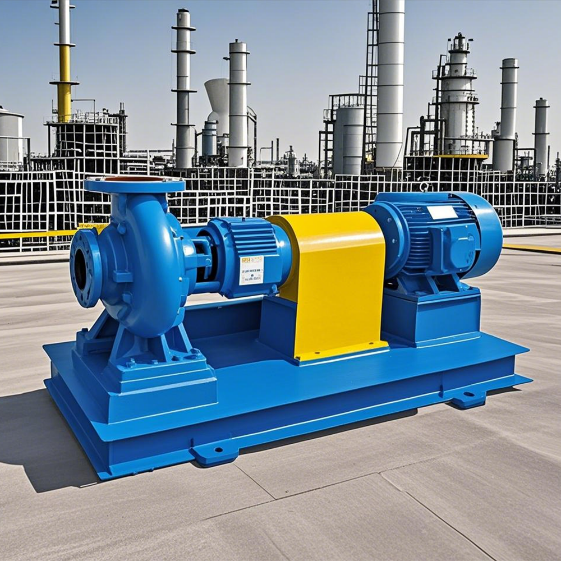
API 610: The Core Standard for Petrochemical Centrifugal Pumps
Design, materials, and performance requirements for mechanically sealed centrifugal pumps
The API 610 standard has become the go-to reference for centrifugal pumps dealing with dangerous petrochemical substances. For parts that come into contact with these chemicals, manufacturers are required to use corrosion resistant materials like duplex stainless steel. This helps maintain pump integrity over time when exposed to harsh chemical conditions. When it comes to mechanical seals, compliance with API RP 682 flush plans is absolutely essential for preventing leaks in applications where even small amounts of fluid escape could be disastrous. The performance standards set by API 610 cover several key areas including specified operating ranges, baseline efficiency levels, and expectations that bearings should last around 25,000 hours during continuous operation. These tests happen at the factory following ISO 5199 guidelines before pumps ever reach installation sites. All these requirements work together to keep equipment running reliably while maintaining safety standards throughout refineries and chemical processing facilities worldwide.
Vibration, reliability, and high-pressure/high-temperature validation protocols
Pumps that meet API 610 standards go through extensive testing to make sure they can handle tough operating conditions. When it comes to vibration checks, we follow ISO 10816-3 specifically rather than the general ISO 10816 guidelines. The acceptable limit stands at 4.5 mm/s RMS for those horizontal overhung models, though vertical setups need to meet even tighter requirements. To check if pump casings hold up, manufacturers perform hydrostatic tests at 1.5 times the design pressure according to ASME B16.5 standards. For high temp applications, there's also this thermal shock test where units get heated rapidly from room temperature right up to their maximum service temperature within just five minutes. This helps engineers see how well components maintain their shape and how seals behave under stress. Reliability testing involves running pumps continuously for 100 hours through simulated real-world conditions while making sure the net positive suction head (NPSH) margin stays at least 10% above what's needed. All these different tests work together toward one main objective outlined in the standard itself: keeping equipment running smoothly without unexpected breakdowns when processes get really demanding.
Sealless Solutions: API 685 and ISO 15783 for Hazardous Service
How API 685 magnetic drive centrifugal pumps eliminate fugitive emissions
The API 685 standard sets out detailed specifications for sealless centrifugal pumps operating in dangerous petrochemical environments. These pumps work differently from traditional models because they replace mechanical seals with magnetic drive systems that transfer torque through a containment shell without needing any physical shaft connections. What this means is that the main cause of those pesky fugitive emissions from rotating equipment gets eliminated entirely. Research shows that about 95 percent of all volatile organic compound leaks come from mechanical seals alone. When following API 685 guidelines, these newer pump designs bring down measurable emissions to below 100 parts per million by volume according to EPA Method 21 testing standards. This works even when facing the kind of temperature changes and pressure fluctuations that happen regularly in distillation processes and hydrotreating operations. The improved containment makes it much easier to meet various regulatory requirements like OSHA's Process Safety Management, EPA's Leak Detection and Repair program, and the European Union's Industrial Emissions Directive without needing extra containment measures or constant monitoring systems.
ISO 15783 alignment with global safety and containment expectations
The ISO 15783 standard sets out consistent safety rules for sealless rotodynamic pumps around the world, building upon and expanding what API 685 already established. The standard requires three layers of protection for handling Category I and II fluids according to ISO 10438 specifications. These include a primary containment shell, then a secondary barrier, and finally an outer pressure casing as backup. When it comes to testing, manufacturers must validate pressure resistance at 150% of the maximum allowable working pressure (MAWP). They also need to qualify materials for sour service environments following NACE MR0175 or ISO 15156 guidelines. Additionally, there needs to be redundant systems in place to monitor the integrity of those secondary containment barriers. Because this standard works well alongside ATEX regulations, IEC 61508 safety standards, and ISO 13849 performance requirements, companies can actually use the same equipment worldwide without having to worry about meeting different local regulations such as OSHA 1910.119 in the US or the EU's Seveso III directive.
Global Compliance Pathways: ISO 13709, API Equivalence, and Procurement Strategy
For multinational petrochemical operations, centrifugal pumps need to meet globally accepted standards, with ISO 13709 being particularly important as it serves as the international version of API 610. Although API 610 is still widely used across North America, ISO 13709 offers similar technical requirements when it comes to design principles, materials chosen, and testing procedures. This includes things like matching vibration limits under ISO 10816-3, consistent pressure ratings following either ASME B16.5 or EN 1092-1 standards, and proper handling of thermal expansion issues. When sourcing equipment, companies should look for suppliers who can prove they meet both API and ISO standards through actual certification documents rather than just putting labels on products. The right paperwork matters too: complete material test reports, approved welding specs, and third party tested performance data all count. According to recent research from the Ponemon Institute's 2023 report on process equipment compliance, combining ISO 9001 quality systems with checks across different standards cuts down on rework problems by about 30%. And don't forget this key point: making sure hydraulic and mechanical tests pass against both sets of rules helps avoid expensive field failures. We've seen cases where not verifying these details properly led to downtime costs running over seven hundred forty thousand dollars per year at major refineries.
This approach ensures consistent mechanical integrity—from Arctic offshore platforms to tropical coastal crackers—while maintaining auditable, jurisdiction-ready documentation trails for regulators including the U.S. CSB, UK HSE, and Singapore MOM.
Selecting the Right Centrifugal Pump: A Decision Framework for Petrochemical Engineers
Matching service conditions (fluid, temperature, pressure) to standard-specific pump types
Choosing the right pump starts by matching service conditions to specific design standards. When dealing with corrosive or sour fluids like those containing hydrogen sulfide, we need wetted parts that meet NACE MR0175/ISO 15156 and API RP 939-C requirements. Super duplex stainless steel or nickel alloys usually work best for these applications. If temperatures go above 204 degrees Celsius (that's about 400 Fahrenheit), then BB style casings become necessary according to API 610 BB3 or BB5 specifications. These designs handle thermal expansion properly and include special lubrication systems for high temps. For fluids thicker than 400 centipoise, adjustments to hydraulic calculations are needed using modified affinity laws. Often, traditional OH2 overhung pumps get replaced with BB5 or vertical setups when there's concern about net positive suction head margins and seal integrity issues. Pressure differences over 1,500 psi generally point toward barrel type (BB5) or axial split (BB2) designs as outlined in API 610 Table D.1. Before finalizing any choice, engineers should check fluid compatibility charts against ANSI/ASME B16.5 material classifications and ensure everything works correctly during startup conditions as well as under full load operation.
Vendor certification, third-party verification, and documentation best practices
Good procurement doesn't just rely on what vendors claim they can do—it needs real proof of their capabilities. For engineers, checking for active ASME QRO-1 registration is essential, along with proper API 682 seal system certification that covers all the specifics like seal chamber geometry and flush plans. When it comes to third party verification, we need independent checks from recognized organizations like TÜV SÜD, DNV, or Lloyd's Register. These should include hydrostatic tests at 1.5 times MAWP, vibration analysis following ISO 10816-3 guidelines, and material verification using handheld spectrometers according to ASTM E1479 standards. Important paperwork consists of stamped test reports, complete MTR packages with heat number tracking, and data that enables digital twins including things like laser alignment records and rotor balance certificates. Keeping digital records organized under standards like ISO 15926 or ISO 14224 helps maintain compliance throughout equipment life cycles with regulations such as OSHA 1910.119, PSM audits, and insurance requirements for asset integrity. Industry data shows that companies following standard documentation practices cut down on fixing non-compliance issues by around 37%, while also saving money over the long term when looking at total costs across 15 years of operation.
FAQ
1. What materials are recommended for pumps handling corrosive substances?
For pumps handling corrosive substances, it is recommended to use corrosion-resistant materials like duplex stainless steel or nickel alloys. These materials maintain pump integrity over time under harsh chemical conditions.
2. How do magnetic drive centrifugal pumps help reduce emissions?
Magnetic drive centrifugal pumps, as defined by API 685, eliminate the need for mechanical seals, which are a major source of fugitive emissions. They achieve this by using magnetic drive systems and containment shells, significantly reducing emissions to below 100 parts per million according to EPA standards.
3. What is the significance of ISO 13709 in the petrochemical industry?
ISO 13709 is crucial for multinational petrochemical operations as it provides an international equivalent to API 610. It ensures that centrifugal pumps meet consistent standards globally, including vibration limits, pressure ratings, and handling of thermal expansion.
4. Why is third-party verification important when selecting pumps?
Third-party verification provides independent proof of a vendor's capabilities, ensuring reliability and performance. It includes checks such as hydrostatic tests, vibration analyses, and material verifications from recognized organizations like TÜV SÜD or Lloyd's Register.